🚚 Free Worldwide Shipping on All Orders!Shop Now
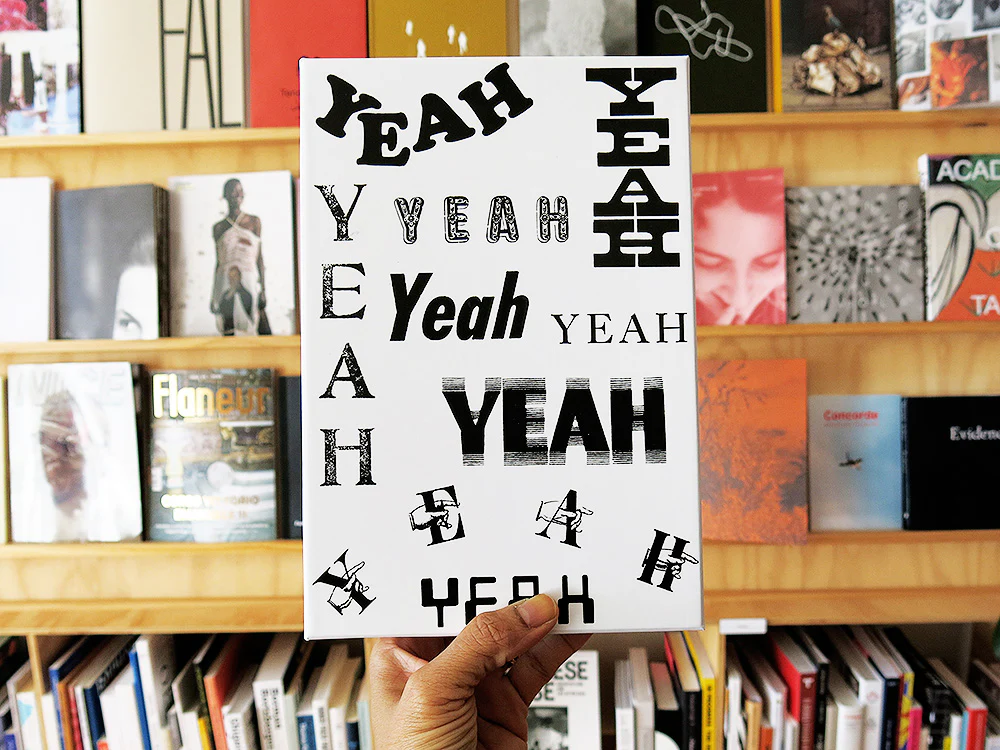
Tuli Kupferberg – YEAH
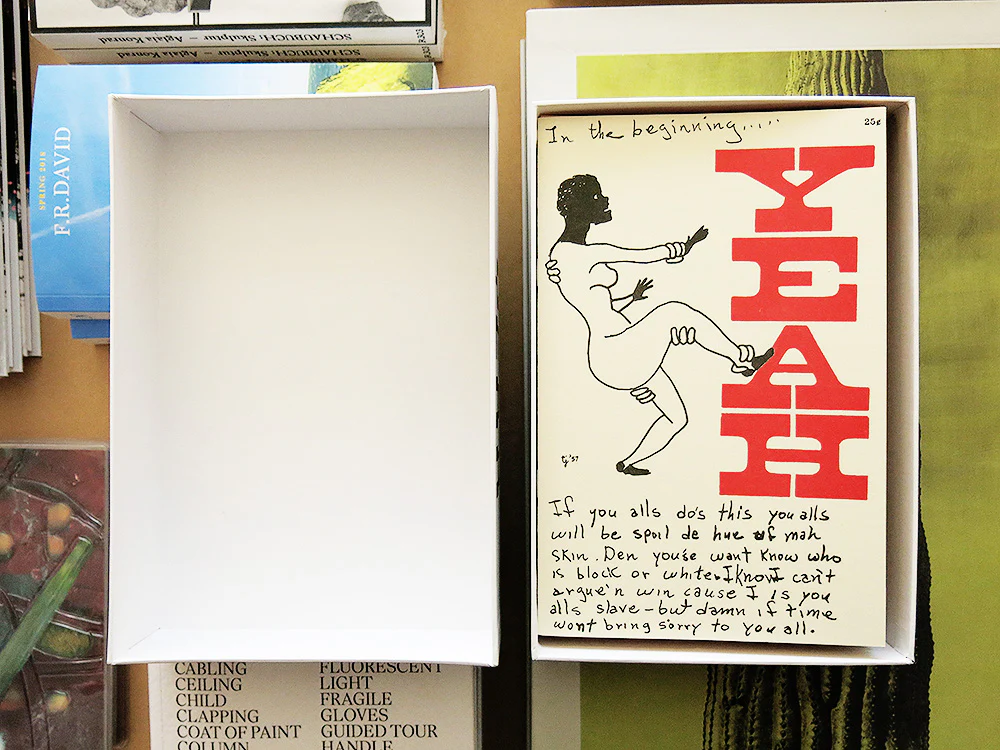
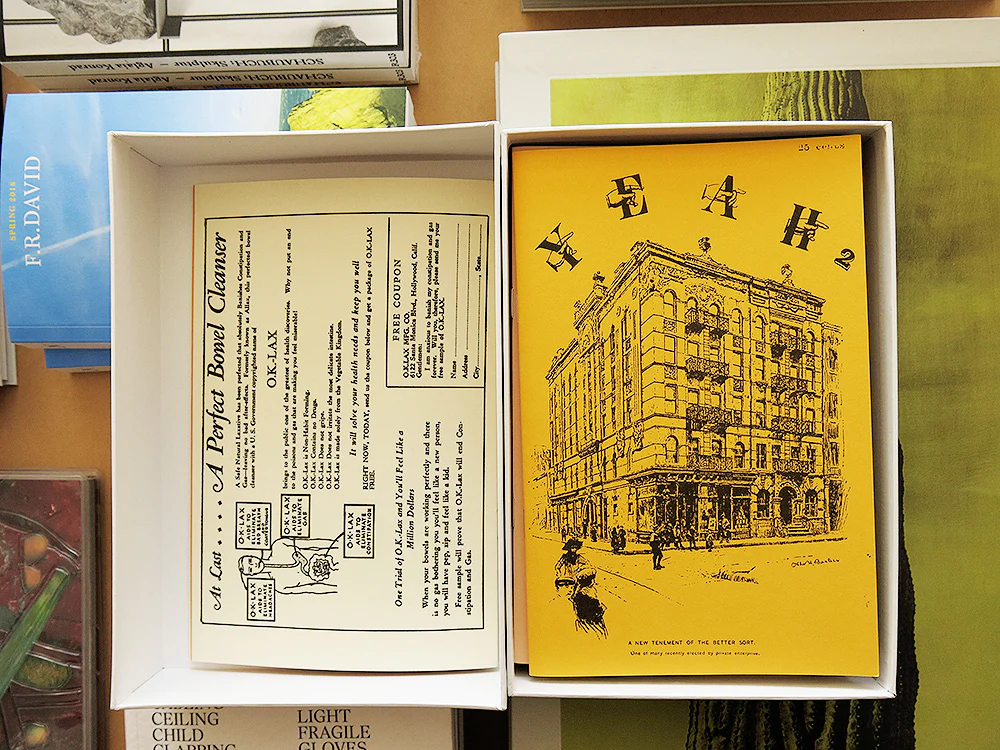
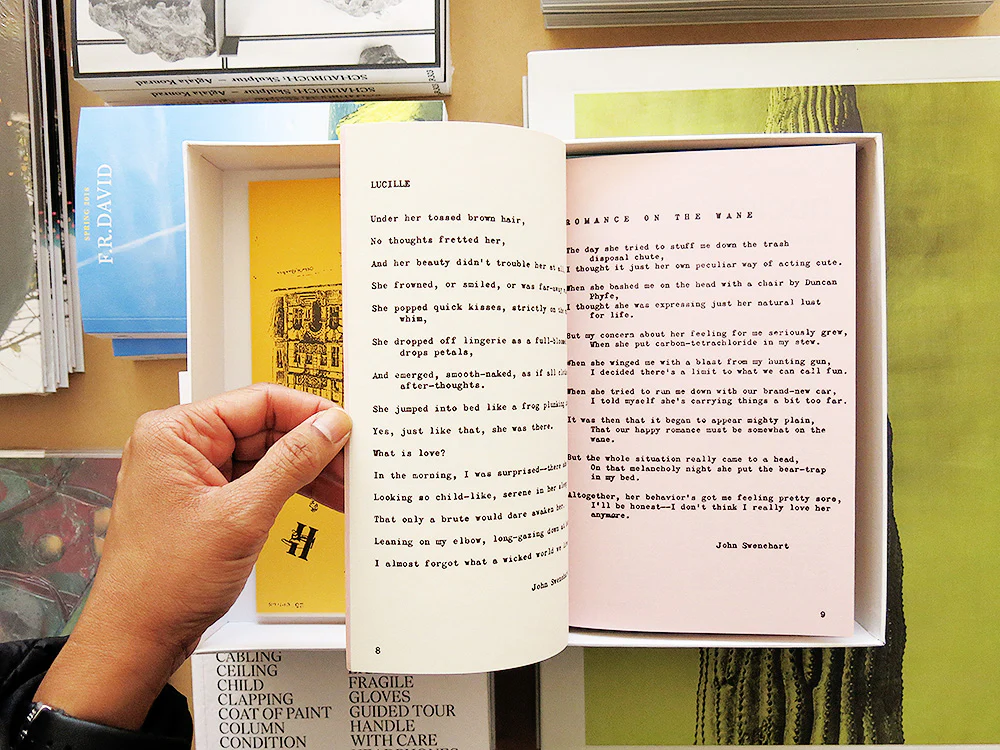
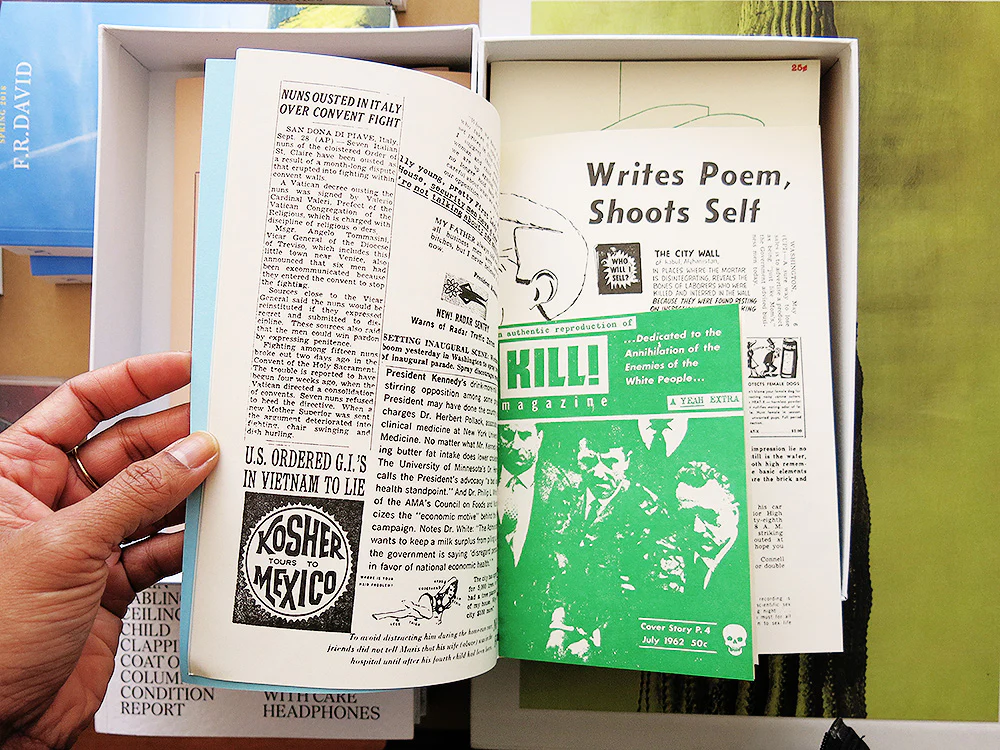
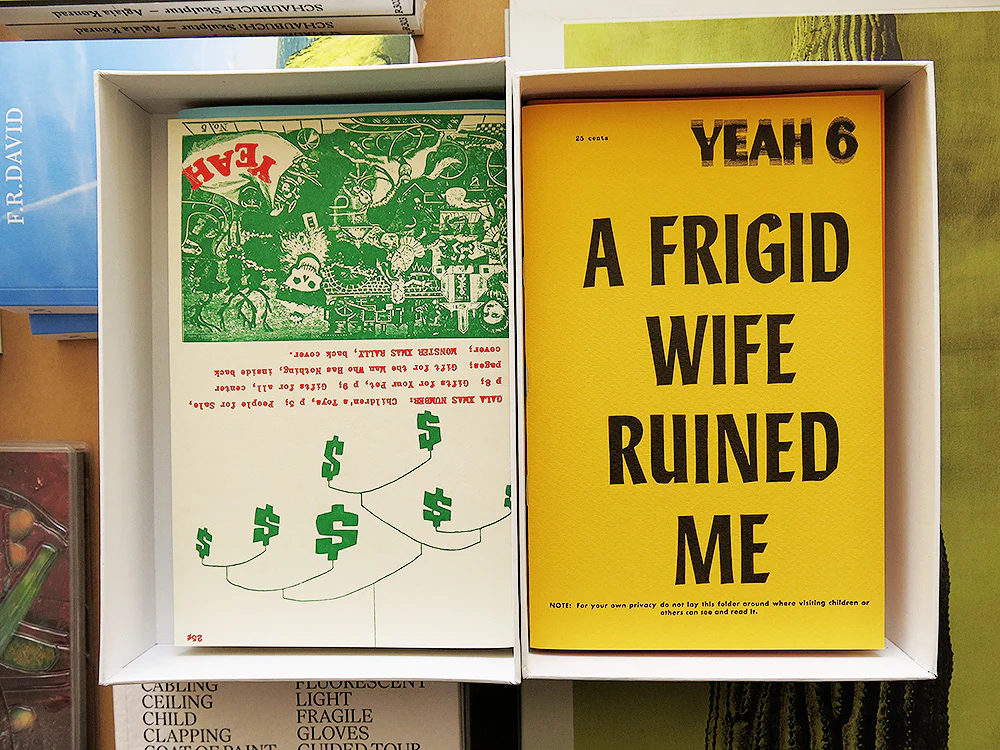
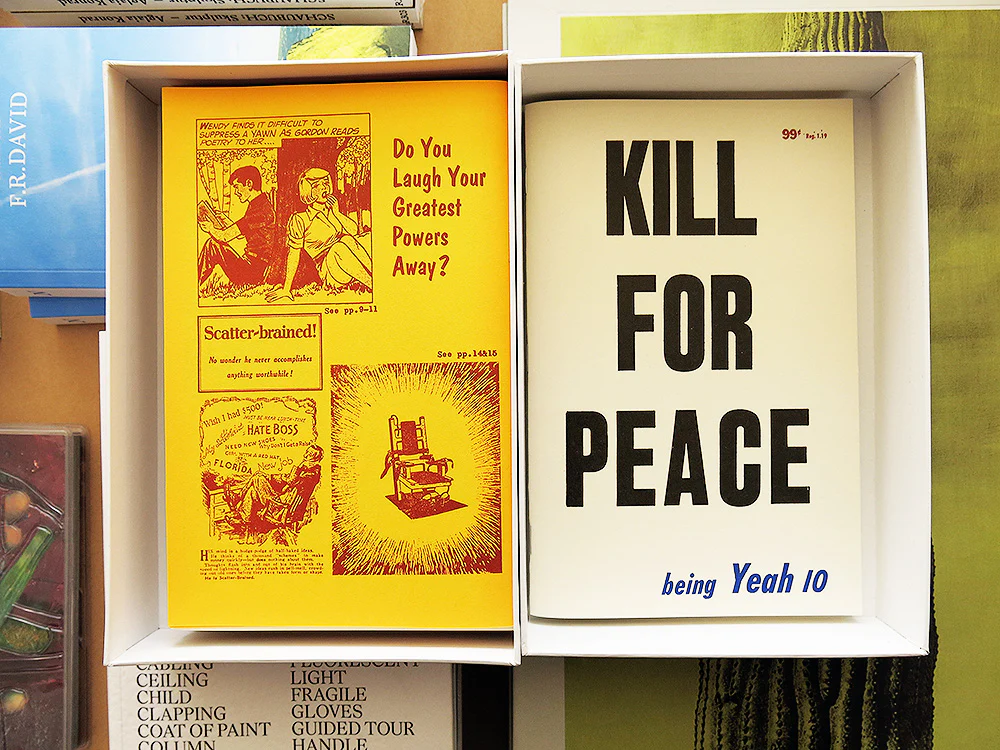
Originally published between 1961 and 1965 by Tuli Kupferberg and Sylvia Topp’s Birth Press, this volume reproduces all ten issues of YEAH magazine as individual facsimile editions, housed in a single box. Kupferberg described the magazine as “a satyric excursion; a sardonic review; a sarcastic epitome; a chronical of the last days,” and throughout its pages he acts as both editor and artist, threading the needle of leftist politics with the sarcasm and sharp creative wit for which he became known as one of the founders of the countercultural rock band The Fugs. YEAH magazine began under the shadow of the Cold War, with Kupferberg and fellow poets contributing poetry, drawings, and collages that protested a number of social issues of the time, including nuclear war, racism, white supremacy, and the conservative, middle-class values that have become the hallmark of 1950s America. By issue 8, Kupferberg dispensed with contributors, choosing instead to feature only his own work. These later issues resemble magazine-length collages, consisting of images, illustrations, and articles appropriated from magazines and newspapers compiled in an aesthetic akin to the punk, cut-and-past zine that later took shape in the ‘70s and ‘80s.
342 pages, 21.6 x 14cm, 10 issues in a hardcover box, Primary Information (New York)
342 pages, 21.6 x 14cm, 10 issues in a hardcover box, Primary Information (New York)
$13.72
Original: $39.21
-65%Tuli Kupferberg – YEAH—
$39.21
$13.72More Images
Tuli Kupferberg – YEAH
Originally published between 1961 and 1965 by Tuli Kupferberg and Sylvia Topp’s Birth Press, this volume reproduces all ten issues of YEAH magazine as individual facsimile editions, housed in a single box. Kupferberg described the magazine as “a satyric excursion; a sardonic review; a sarcastic epitome; a chronical of the last days,” and throughout its pages he acts as both editor and artist, threading the needle of leftist politics with the sarcasm and sharp creative wit for which he became known as one of the founders of the countercultural rock band The Fugs. YEAH magazine began under the shadow of the Cold War, with Kupferberg and fellow poets contributing poetry, drawings, and collages that protested a number of social issues of the time, including nuclear war, racism, white supremacy, and the conservative, middle-class values that have become the hallmark of 1950s America. By issue 8, Kupferberg dispensed with contributors, choosing instead to feature only his own work. These later issues resemble magazine-length collages, consisting of images, illustrations, and articles appropriated from magazines and newspapers compiled in an aesthetic akin to the punk, cut-and-past zine that later took shape in the ‘70s and ‘80s.
342 pages, 21.6 x 14cm, 10 issues in a hardcover box, Primary Information (New York)
342 pages, 21.6 x 14cm, 10 issues in a hardcover box, Primary Information (New York)
Product Information
Product Information
Shipping & Returns
Shipping & Returns
Description
Originally published between 1961 and 1965 by Tuli Kupferberg and Sylvia Topp’s Birth Press, this volume reproduces all ten issues of YEAH magazine as individual facsimile editions, housed in a single box. Kupferberg described the magazine as “a satyric excursion; a sardonic review; a sarcastic epitome; a chronical of the last days,” and throughout its pages he acts as both editor and artist, threading the needle of leftist politics with the sarcasm and sharp creative wit for which he became known as one of the founders of the countercultural rock band The Fugs. YEAH magazine began under the shadow of the Cold War, with Kupferberg and fellow poets contributing poetry, drawings, and collages that protested a number of social issues of the time, including nuclear war, racism, white supremacy, and the conservative, middle-class values that have become the hallmark of 1950s America. By issue 8, Kupferberg dispensed with contributors, choosing instead to feature only his own work. These later issues resemble magazine-length collages, consisting of images, illustrations, and articles appropriated from magazines and newspapers compiled in an aesthetic akin to the punk, cut-and-past zine that later took shape in the ‘70s and ‘80s.
342 pages, 21.6 x 14cm, 10 issues in a hardcover box, Primary Information (New York)
342 pages, 21.6 x 14cm, 10 issues in a hardcover box, Primary Information (New York)