Edition Digital Culture 3: Public Domain
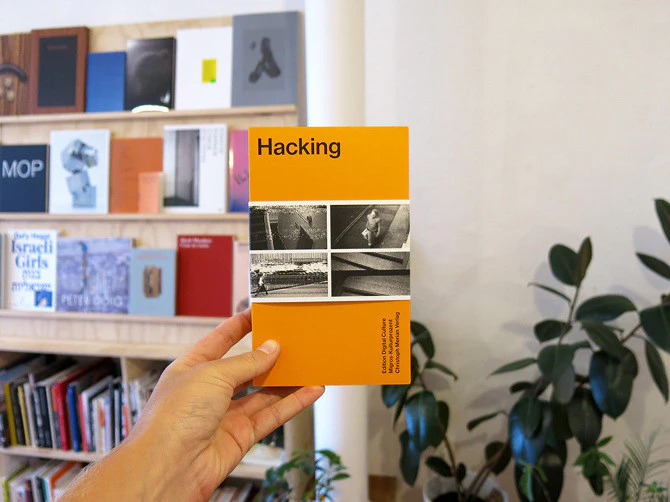
Seventy years after the death of the originator, his or her works become public intellectual property; they are in the public domain and so belong to the public. This affects not just medieval texts, but also 20th century books and works. Thanks to digitisation the treatment of these works has taken on a whole new dynamism. For museums, libraries, archives and galleries, the public domain is a challenge, but also an opportunity. This book explains the copyright fundamentals of the public domain and discusses the difficulties involved in implementing it in the everyday functioning of cultural institutions. Published by Christoph Merian (Basel).
300 pages, 11 x 18 cm, paperback, Christoph Merian (Basel).
Original: $21.39
-65%$21.39
$7.49More Images


Edition Digital Culture 3: Public Domain
Seventy years after the death of the originator, his or her works become public intellectual property; they are in the public domain and so belong to the public. This affects not just medieval texts, but also 20th century books and works. Thanks to digitisation the treatment of these works has taken on a whole new dynamism. For museums, libraries, archives and galleries, the public domain is a challenge, but also an opportunity. This book explains the copyright fundamentals of the public domain and discusses the difficulties involved in implementing it in the everyday functioning of cultural institutions. Published by Christoph Merian (Basel).
300 pages, 11 x 18 cm, paperback, Christoph Merian (Basel).
Product Information
Product Information
Shipping & Returns
Shipping & Returns
Description
Seventy years after the death of the originator, his or her works become public intellectual property; they are in the public domain and so belong to the public. This affects not just medieval texts, but also 20th century books and works. Thanks to digitisation the treatment of these works has taken on a whole new dynamism. For museums, libraries, archives and galleries, the public domain is a challenge, but also an opportunity. This book explains the copyright fundamentals of the public domain and discusses the difficulties involved in implementing it in the everyday functioning of cultural institutions. Published by Christoph Merian (Basel).
300 pages, 11 x 18 cm, paperback, Christoph Merian (Basel).