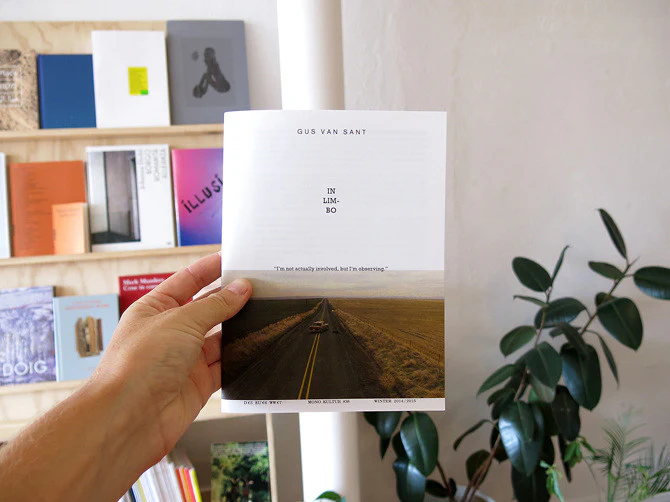
mono.kultur #38 Gus van Sant: In Limbo
“I’m not actually involved, but I’m observing.”
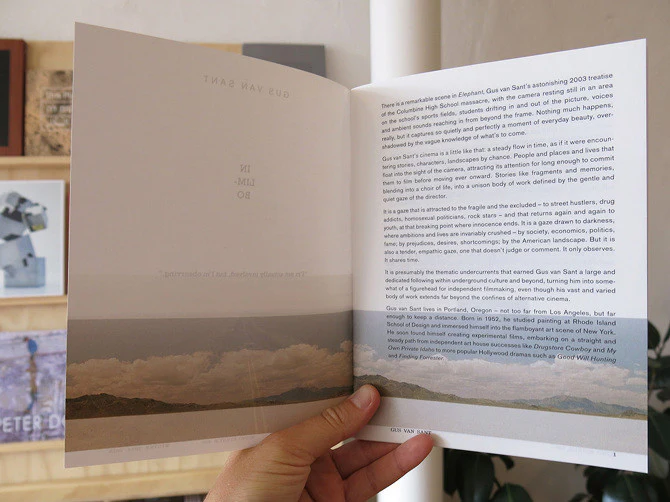
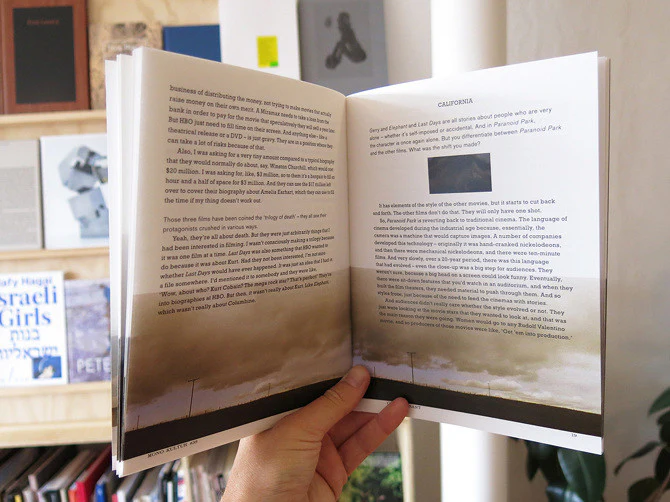
There is a remarkable scene in Elephant, Gus van Sant’s astonishing 2003 treatise of the Columbine High School massacre, with the camera resting still in an area on the school’s sports fields, students drifting in and out of the picture, voices and ambient sounds reaching in from beyond the frame. Nothing much happens, really, but it captures so quietly and perfectly a moment of everyday beauty, overshadowed by the vague knowledge of what’s to come. Gus van Sant’s cinema is a little like that: a steady flow in time, as if it were encountering stories, characters, landscapes by chance. People and places and lives that float into the sight of the camera, attracting its attention for long enough to commit them to film before moving ever onward. Known for films including Drugstore Cowboy and My Own Private Idaho to more popular dramas such as Good Will Hunting and Finding Forrester, Van Sant is one of the only filmmakers to work within and without Hollywood, his dreamlike films cutting their own swathe through the cultural ether. The latest edition of celebrated Berlin interview magazine mono.kultur traces his oeuvre and approach at length.
44 pages, 15 x 20 cm, softcover, mono.kultur (Berlin).
More Images




mono.kultur #38 Gus van Sant: In Limbo
“I’m not actually involved, but I’m observing.”
There is a remarkable scene in Elephant, Gus van Sant’s astonishing 2003 treatise of the Columbine High School massacre, with the camera resting still in an area on the school’s sports fields, students drifting in and out of the picture, voices and ambient sounds reaching in from beyond the frame. Nothing much happens, really, but it captures so quietly and perfectly a moment of everyday beauty, overshadowed by the vague knowledge of what’s to come. Gus van Sant’s cinema is a little like that: a steady flow in time, as if it were encountering stories, characters, landscapes by chance. People and places and lives that float into the sight of the camera, attracting its attention for long enough to commit them to film before moving ever onward. Known for films including Drugstore Cowboy and My Own Private Idaho to more popular dramas such as Good Will Hunting and Finding Forrester, Van Sant is one of the only filmmakers to work within and without Hollywood, his dreamlike films cutting their own swathe through the cultural ether. The latest edition of celebrated Berlin interview magazine mono.kultur traces his oeuvre and approach at length.
44 pages, 15 x 20 cm, softcover, mono.kultur (Berlin).
Product Information
Product Information
Shipping & Returns
Shipping & Returns
Description
“I’m not actually involved, but I’m observing.”
There is a remarkable scene in Elephant, Gus van Sant’s astonishing 2003 treatise of the Columbine High School massacre, with the camera resting still in an area on the school’s sports fields, students drifting in and out of the picture, voices and ambient sounds reaching in from beyond the frame. Nothing much happens, really, but it captures so quietly and perfectly a moment of everyday beauty, overshadowed by the vague knowledge of what’s to come. Gus van Sant’s cinema is a little like that: a steady flow in time, as if it were encountering stories, characters, landscapes by chance. People and places and lives that float into the sight of the camera, attracting its attention for long enough to commit them to film before moving ever onward. Known for films including Drugstore Cowboy and My Own Private Idaho to more popular dramas such as Good Will Hunting and Finding Forrester, Van Sant is one of the only filmmakers to work within and without Hollywood, his dreamlike films cutting their own swathe through the cultural ether. The latest edition of celebrated Berlin interview magazine mono.kultur traces his oeuvre and approach at length.
44 pages, 15 x 20 cm, softcover, mono.kultur (Berlin).