Latif Al Ani
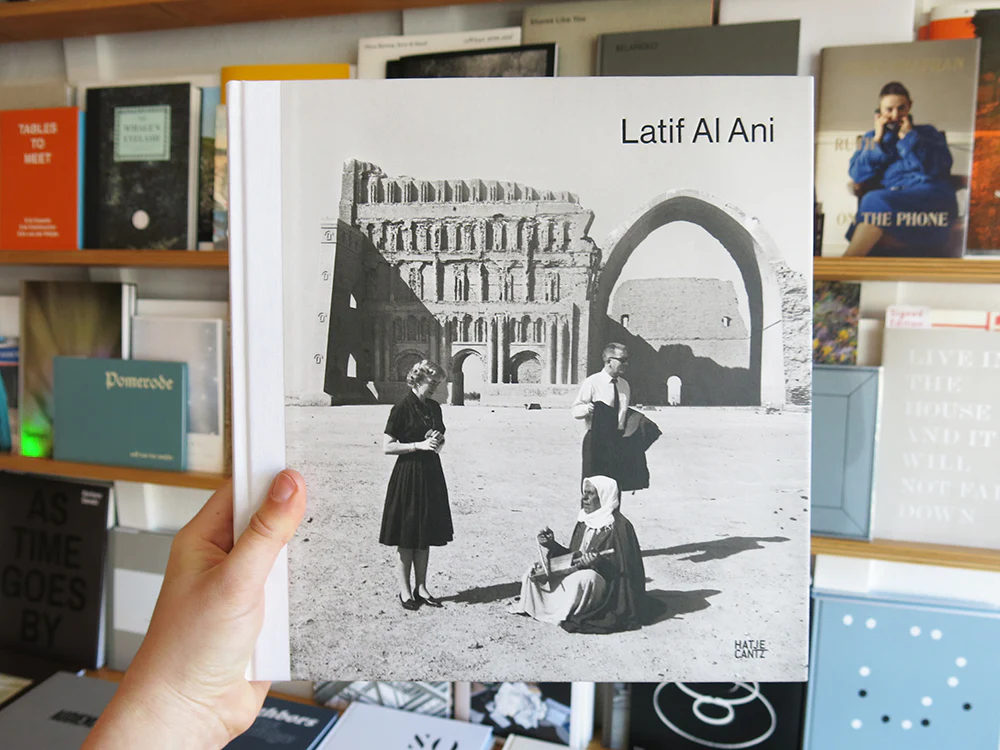
Latif Al Ani was the first to capture cosmopolitan life in Iraq in the 1950s to 1970s and is known as the 'father of Iraqi photography'. His black and white images represent a unique visual memory of the country during its belle epoque. However, under Saddam Hussein's oppressive regime he ceased photographing. Today, his photographs give testimony to an era long gone. The exhibition at the Iraq Pavilion during the Venice Biennale in 2016 focused on works from the early period of his career, showing both modernising trends and the retention of ancient traditions as themes of Al Ani's work.
200 pages, 25 x 29 cm, hardcover, Hatje Cantz (Berlin)
Original: $49.20
-65%$49.20
$17.22More Images


Latif Al Ani
Latif Al Ani was the first to capture cosmopolitan life in Iraq in the 1950s to 1970s and is known as the 'father of Iraqi photography'. His black and white images represent a unique visual memory of the country during its belle epoque. However, under Saddam Hussein's oppressive regime he ceased photographing. Today, his photographs give testimony to an era long gone. The exhibition at the Iraq Pavilion during the Venice Biennale in 2016 focused on works from the early period of his career, showing both modernising trends and the retention of ancient traditions as themes of Al Ani's work.
200 pages, 25 x 29 cm, hardcover, Hatje Cantz (Berlin)
Product Information
Product Information
Shipping & Returns
Shipping & Returns
Description
Latif Al Ani was the first to capture cosmopolitan life in Iraq in the 1950s to 1970s and is known as the 'father of Iraqi photography'. His black and white images represent a unique visual memory of the country during its belle epoque. However, under Saddam Hussein's oppressive regime he ceased photographing. Today, his photographs give testimony to an era long gone. The exhibition at the Iraq Pavilion during the Venice Biennale in 2016 focused on works from the early period of his career, showing both modernising trends and the retention of ancient traditions as themes of Al Ani's work.
200 pages, 25 x 29 cm, hardcover, Hatje Cantz (Berlin)