In The Canyon, Revise The Canon
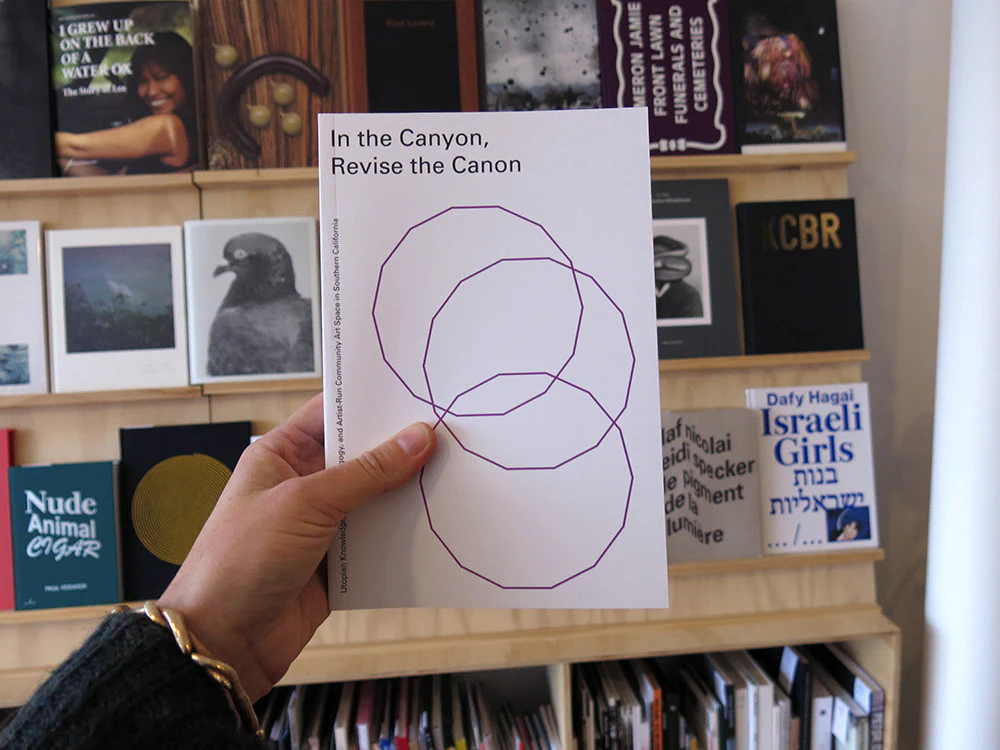
Before the onset of the social and cultural backlash that was brought on by the Reagan administration in the early 1980s, Southern California was ripe territory for the genesis and development of emancipation movements for and by African Americans, Chicanos, pacifists, Marxists, feminists and homosexuals. Starting in the late 1960s, these revolutionary waves particularly influenced practices such as performance art, video, installation and collaboration, which led to the construction of alternatives like artist-run spaces, non-profit spaces and artist-run community art spaces. In Santa Barbara, Los Angeles and San Diego, collaborative public action was constructed around utopian knowledge which was then redirected towards universities and art schools that favored the emergence of radical pedagogies. These other manners of experimental thinking, doing and teaching permitted artists to deconstruct certain canons that were inherited from European tradition and art history, and provoked a reexamination of “the American way of life”. Published by Shelter Press (St. Martin).
208 pages, 14 x 21 cm, softcover, Shelter Press (St. Martin).
Original: $17.11
-65%$17.11
$5.99In The Canyon, Revise The Canon
Before the onset of the social and cultural backlash that was brought on by the Reagan administration in the early 1980s, Southern California was ripe territory for the genesis and development of emancipation movements for and by African Americans, Chicanos, pacifists, Marxists, feminists and homosexuals. Starting in the late 1960s, these revolutionary waves particularly influenced practices such as performance art, video, installation and collaboration, which led to the construction of alternatives like artist-run spaces, non-profit spaces and artist-run community art spaces. In Santa Barbara, Los Angeles and San Diego, collaborative public action was constructed around utopian knowledge which was then redirected towards universities and art schools that favored the emergence of radical pedagogies. These other manners of experimental thinking, doing and teaching permitted artists to deconstruct certain canons that were inherited from European tradition and art history, and provoked a reexamination of “the American way of life”. Published by Shelter Press (St. Martin).
208 pages, 14 x 21 cm, softcover, Shelter Press (St. Martin).
Product Information
Product Information
Shipping & Returns
Shipping & Returns
Description
Before the onset of the social and cultural backlash that was brought on by the Reagan administration in the early 1980s, Southern California was ripe territory for the genesis and development of emancipation movements for and by African Americans, Chicanos, pacifists, Marxists, feminists and homosexuals. Starting in the late 1960s, these revolutionary waves particularly influenced practices such as performance art, video, installation and collaboration, which led to the construction of alternatives like artist-run spaces, non-profit spaces and artist-run community art spaces. In Santa Barbara, Los Angeles and San Diego, collaborative public action was constructed around utopian knowledge which was then redirected towards universities and art schools that favored the emergence of radical pedagogies. These other manners of experimental thinking, doing and teaching permitted artists to deconstruct certain canons that were inherited from European tradition and art history, and provoked a reexamination of “the American way of life”. Published by Shelter Press (St. Martin).
208 pages, 14 x 21 cm, softcover, Shelter Press (St. Martin).