Hoda Afshar – The Fold
The Fold is a critical visual and psychological investigation into the enduring legacy of Orientalist and colonialist photographic practices, and the ways in which these gazes continue to shape how bodies—particularly veiled Islamic bodies—are seen, archived, and consumed.
This new body of work by Iranian artist Hoda Afshar takes as its starting point the vast archive of Gaëtan Gatian de Clérambault (1872–1934), a French psychiatrist and photographer who, in the early 20th century, produced thousands of images of veiled women—and sometimes men—in Morocco. Encountered by Afshar during her research at the musée du quai Branly - Jacques Chirac in Paris, these photographs were originally used by de Clérambault to support psychoanalytic theories around fantasy, covering, and desire, all filtered through a deeply colonial lens.
For the first time in her practice, Afshar engages directly with an archival body of work. Having discovered that the museum’s online archive automatically cropped de Clérambault's images upon downloading, Afshar furthers this degradation into an embedded commentary. By darkroom printing and digitally manipulating these fragments, she ruptures their original intent and transforms them into a space of resistance. Her interventions turn the gaze back on itself—inviting viewers to question the power dynamics woven into the act of looking, and to confront the cultural biases projected onto the veil.
Born after the Islamic Revolution in Iran, Afshar came of age in a society where the veil had become a central symbol in the negotiation of political and cultural identity. At the heart of her engagement with the archive is a recognition of how the Islamic female body has long been instrumentalised to serve competing ideologies. While unveiling was used to justify imperial conquest, re-veiling became a symbol of resistance—yet has also been enforced by state authorities for coercive ends. Through the reworking of these colonial images, Afshar navigates this entangled history, forging a third path that critiques both external and internal forms of domination.
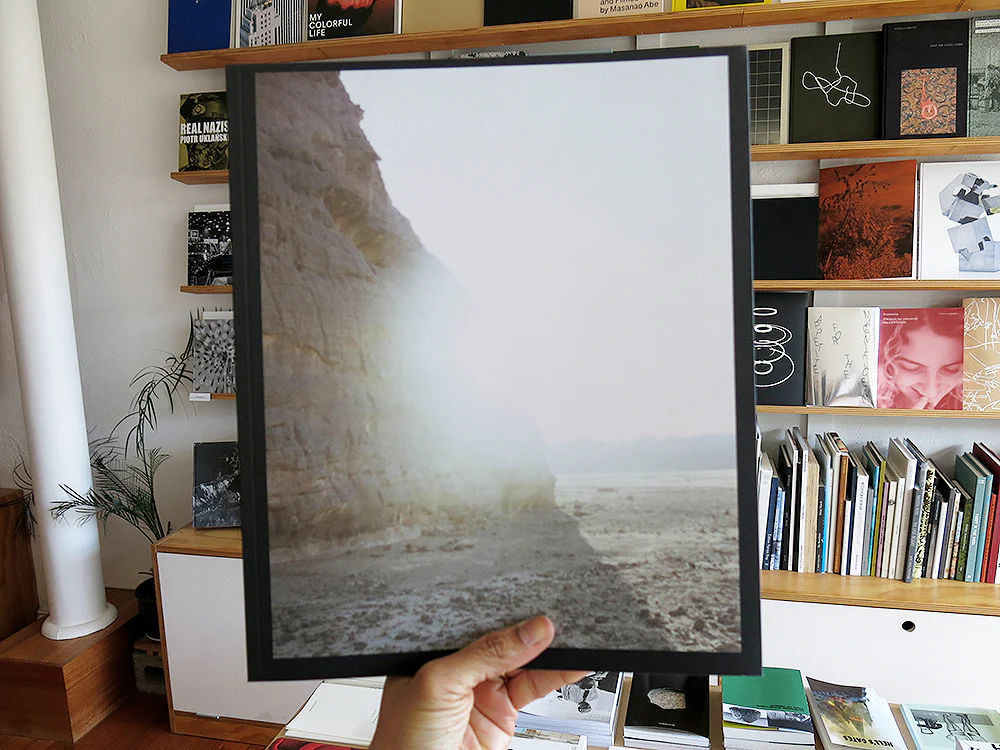
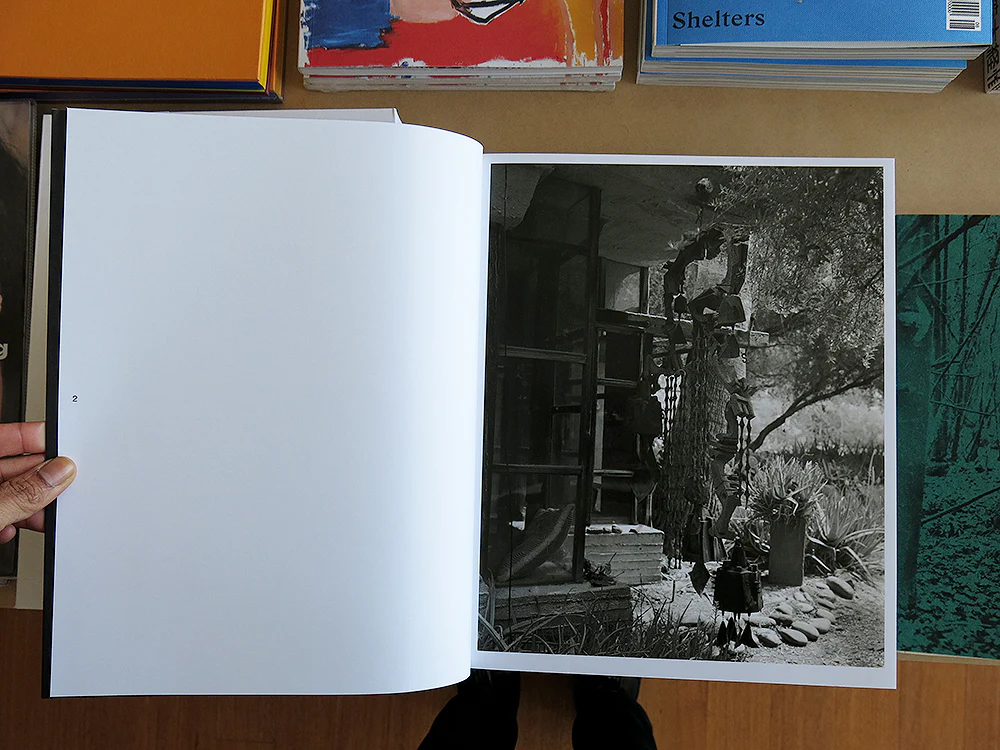
This experimental book gathers more than 960 of Afshar’s silver gelatin reappropriations of de Clérambault’s archive, each one a gesture of reworking, refusal, and critical reflection. The Fold includes essays by Ali Behdad and Annabelle Lacour, a conversation between Taous Dahmani and the artist, and is published to accompany Afshar’s solo exhibition Hoda Afshar. Performer l'invisible, at the musée du quai Branly – Jacques Chirac.
Bilingual in English and French
228 pages, 24.5 x 24.5 cm, softcover, Loose Joints (Marseille).
More Images


Hoda Afshar – The Fold
The Fold is a critical visual and psychological investigation into the enduring legacy of Orientalist and colonialist photographic practices, and the ways in which these gazes continue to shape how bodies—particularly veiled Islamic bodies—are seen, archived, and consumed.
This new body of work by Iranian artist Hoda Afshar takes as its starting point the vast archive of Gaëtan Gatian de Clérambault (1872–1934), a French psychiatrist and photographer who, in the early 20th century, produced thousands of images of veiled women—and sometimes men—in Morocco. Encountered by Afshar during her research at the musée du quai Branly - Jacques Chirac in Paris, these photographs were originally used by de Clérambault to support psychoanalytic theories around fantasy, covering, and desire, all filtered through a deeply colonial lens.
For the first time in her practice, Afshar engages directly with an archival body of work. Having discovered that the museum’s online archive automatically cropped de Clérambault's images upon downloading, Afshar furthers this degradation into an embedded commentary. By darkroom printing and digitally manipulating these fragments, she ruptures their original intent and transforms them into a space of resistance. Her interventions turn the gaze back on itself—inviting viewers to question the power dynamics woven into the act of looking, and to confront the cultural biases projected onto the veil.
Born after the Islamic Revolution in Iran, Afshar came of age in a society where the veil had become a central symbol in the negotiation of political and cultural identity. At the heart of her engagement with the archive is a recognition of how the Islamic female body has long been instrumentalised to serve competing ideologies. While unveiling was used to justify imperial conquest, re-veiling became a symbol of resistance—yet has also been enforced by state authorities for coercive ends. Through the reworking of these colonial images, Afshar navigates this entangled history, forging a third path that critiques both external and internal forms of domination.
This experimental book gathers more than 960 of Afshar’s silver gelatin reappropriations of de Clérambault’s archive, each one a gesture of reworking, refusal, and critical reflection. The Fold includes essays by Ali Behdad and Annabelle Lacour, a conversation between Taous Dahmani and the artist, and is published to accompany Afshar’s solo exhibition Hoda Afshar. Performer l'invisible, at the musée du quai Branly – Jacques Chirac.
Bilingual in English and French
228 pages, 24.5 x 24.5 cm, softcover, Loose Joints (Marseille).
Product Information
Product Information
Shipping & Returns
Shipping & Returns
Description
The Fold is a critical visual and psychological investigation into the enduring legacy of Orientalist and colonialist photographic practices, and the ways in which these gazes continue to shape how bodies—particularly veiled Islamic bodies—are seen, archived, and consumed.
This new body of work by Iranian artist Hoda Afshar takes as its starting point the vast archive of Gaëtan Gatian de Clérambault (1872–1934), a French psychiatrist and photographer who, in the early 20th century, produced thousands of images of veiled women—and sometimes men—in Morocco. Encountered by Afshar during her research at the musée du quai Branly - Jacques Chirac in Paris, these photographs were originally used by de Clérambault to support psychoanalytic theories around fantasy, covering, and desire, all filtered through a deeply colonial lens.
For the first time in her practice, Afshar engages directly with an archival body of work. Having discovered that the museum’s online archive automatically cropped de Clérambault's images upon downloading, Afshar furthers this degradation into an embedded commentary. By darkroom printing and digitally manipulating these fragments, she ruptures their original intent and transforms them into a space of resistance. Her interventions turn the gaze back on itself—inviting viewers to question the power dynamics woven into the act of looking, and to confront the cultural biases projected onto the veil.
Born after the Islamic Revolution in Iran, Afshar came of age in a society where the veil had become a central symbol in the negotiation of political and cultural identity. At the heart of her engagement with the archive is a recognition of how the Islamic female body has long been instrumentalised to serve competing ideologies. While unveiling was used to justify imperial conquest, re-veiling became a symbol of resistance—yet has also been enforced by state authorities for coercive ends. Through the reworking of these colonial images, Afshar navigates this entangled history, forging a third path that critiques both external and internal forms of domination.
This experimental book gathers more than 960 of Afshar’s silver gelatin reappropriations of de Clérambault’s archive, each one a gesture of reworking, refusal, and critical reflection. The Fold includes essays by Ali Behdad and Annabelle Lacour, a conversation between Taous Dahmani and the artist, and is published to accompany Afshar’s solo exhibition Hoda Afshar. Performer l'invisible, at the musée du quai Branly – Jacques Chirac.
Bilingual in English and French
228 pages, 24.5 x 24.5 cm, softcover, Loose Joints (Marseille).