Architecture Of Appropriation: On squatting as spatial practice
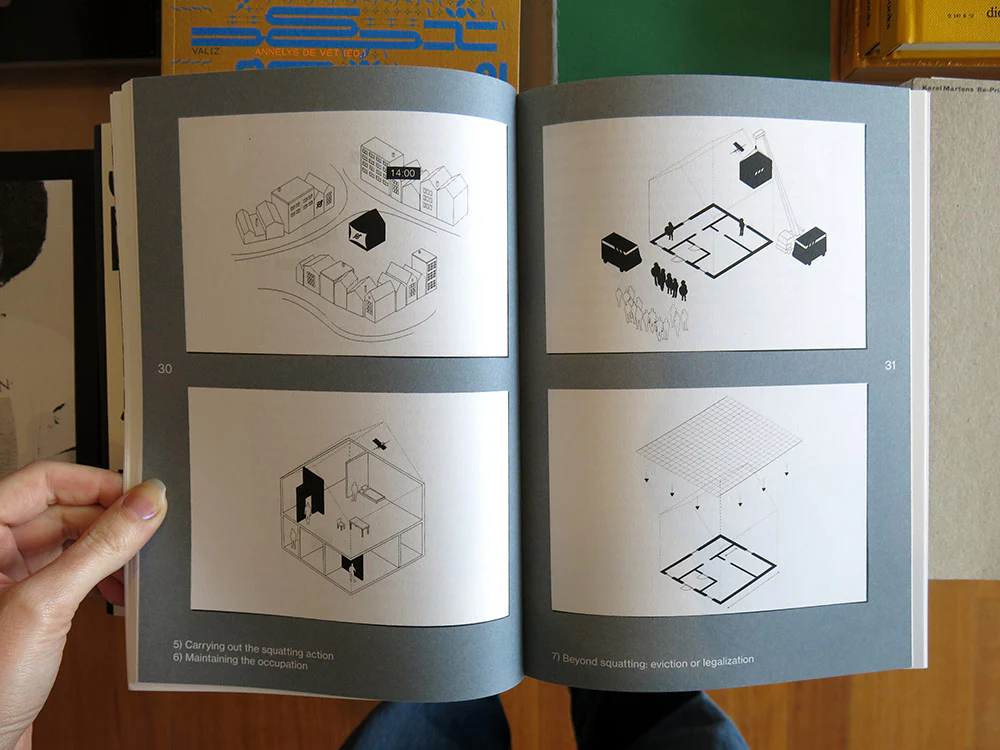
The squatting movement in the Netherlands has played a major role in the design of both the urban fabric and domestic interior, and continues to offer alternatives to the dominant, market-oriented housing policies. This book acknowledges squatting as an architectural practice, analysing six locations through drawings, interviews, and archival material to create a record of past and current struggles, spaces, and oral histories, thereby forming the basis for a new governmental acquisition policy. It brings together the expertise of the squatting movement with architects, archivists, scholars, and lawyers in order to discuss approaches to what are often criminalised spatial practices.
396 pages, 17 x 24 cm, paperback, Het Nieuwe Instituut (Rotterdam).
Original: $32.08
-65%$32.08
$11.23More Images


Architecture Of Appropriation: On squatting as spatial practice
The squatting movement in the Netherlands has played a major role in the design of both the urban fabric and domestic interior, and continues to offer alternatives to the dominant, market-oriented housing policies. This book acknowledges squatting as an architectural practice, analysing six locations through drawings, interviews, and archival material to create a record of past and current struggles, spaces, and oral histories, thereby forming the basis for a new governmental acquisition policy. It brings together the expertise of the squatting movement with architects, archivists, scholars, and lawyers in order to discuss approaches to what are often criminalised spatial practices.
396 pages, 17 x 24 cm, paperback, Het Nieuwe Instituut (Rotterdam).
Product Information
Product Information
Shipping & Returns
Shipping & Returns
Description
The squatting movement in the Netherlands has played a major role in the design of both the urban fabric and domestic interior, and continues to offer alternatives to the dominant, market-oriented housing policies. This book acknowledges squatting as an architectural practice, analysing six locations through drawings, interviews, and archival material to create a record of past and current struggles, spaces, and oral histories, thereby forming the basis for a new governmental acquisition policy. It brings together the expertise of the squatting movement with architects, archivists, scholars, and lawyers in order to discuss approaches to what are often criminalised spatial practices.
396 pages, 17 x 24 cm, paperback, Het Nieuwe Instituut (Rotterdam).